BoardGameiac Logo
BOARD GAMEIAC
Board Gaming Background
✦ Tabletop Universe

Disconnect from Screens,
Reconnect with People — at Mumbai's Favourite Social Café

A social cafe for board games, food, tournaments, events & community. Over 350+ curated strategic games await — from gateway titles to deep strategy epics.

Open Daily 10AM–12AM
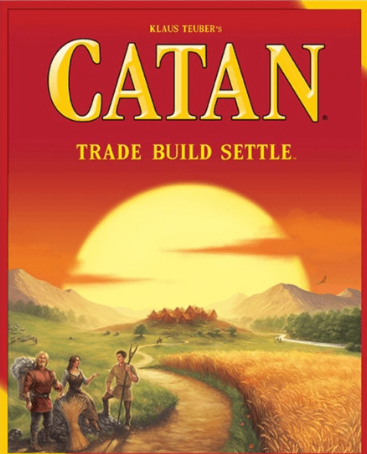
Catan
Classic
Wingspan
Drafting
Dune
Strategy
Azul
Cozy
Brass
Industrial
Nemesis
Adventure
Scythe
Engine
Catan
Classic
Wingspan
Drafting
Dune
Strategy
Azul
Cozy
Brass
Industrial
Nemesis
Adventure
Scythe
Engine
Ark Nova
Strategy
7 Wonders
Drafting
Ticket to Ride
Gateway
Avalon
Deduction
Pandemic
Cooperative
Decrypto
Party
Ark Nova
Strategy
7 Wonders
Drafting
Ticket to Ride
Gateway
Avalon
Deduction
Pandemic
Cooperative
Decrypto
Party

Featured Board Games

Handpicked customer favorites and top-rated classics from our 350+ titles library. Step into the arena, throw the dice, and let the games begin!

Explore Full Vault
Carcassonne
Medieval
Carcassonne

Theme: Area Majority / Influence

Carcassonne is a tile placement game in which the players draw and place a tile with a piece of southern French landscape represented on it. The tile might feature a city, a road, a cloister, grassland or some combination thereof, and it must be placed adjacent to tiles that have already been played, in such a way that cities are connected to cities, roads to roads, et cetera. Having placed a tile, the player can then decide to place one of their meeples in one of the areas on it: in the city as a knight, on the road as a robber, in the cloister as a monk, or in the field as a farmer. When that area is complete that meeple scores points for its owner.

During a game of Carcassonne, players are faced with decisions like: "Is it really worth putting my last meeple there?" or "Should I use this tile to expand my city, or should I place it near my opponent instead, thus making it a harder for them to complete it and score points?" Since players place only one tile and have the option to place one meeple on it, turns proceed quickly even if it is a game full of options and possibilities.

First game in the Carcassonne series.

2-5 45m
Easy
Coup
Bluffing
Coup

Theme: Hidden Roles

You are head of a family in an Italian city-state, a city run by a weak and corrupt court. You need to manipulate, bluff and bribe your way to power. Your object is to destroy the influence of all the other families, forcing them into exile. Only one family will survive...

In Coup, you want to be the last player with influence in the game, with influence being represented by face-down character cards in your playing area.

Each player starts the game with two coins and two influence – i.e., two face-down character cards; the fifteen card deck consists of three copies of five different characters, each with a unique set of powers:

  • Duke: Take three coins from the treasury. Block someone from taking foreign aid.
  • Assassin: Pay three coins and try to assassinate another player's character.
  • Contessa: Block an assassination attempt against yourself.
  • Captain: Take two coins from another player, or block someone from stealing coins from you.
  • Ambassador: Draw two character cards from the Court (the deck), choose which (if any) to exchange with your face-down characters, then return two. Block someone from stealing coins from you.

On your turn, you can take any of the actions listed above, regardless of which characters you actually have in front of you, or you can take one of three other actions:

  • Income: Take one coin from the treasury.
  • Foreign aid: Take two coins from the treasury.
  • Coup: Pay seven coins and launch a coup against an opponent, forcing that player to lose an influence. (If you have ten coins or more, you must take this action.)

When you take one of the character actions – whether actively on your turn, or defensively in response to someone else's action – that character's action automatically succeeds unless an opponent challenges you. In this case, if you can't (or don't) reveal the appropriate character, you lose an influence, turning one of your characters face-up. Face-up characters cannot be used, and if both of your characters are face-up, you're out of the game.

If you do have the character in question and choose to reveal it, the opponent loses an influence, then you shuffle that character into the deck and draw a new one, perhaps getting the same character again and perhaps not.

The last player to still have influence – that is, a face-down character – wins the game!

A new & optional character called the Inquisitor has been added (currently, the only English edition with the Inquisitor included is the Kickstarter Version from Indie Boards & Cards. Copies in stores may not be the Kickstarter versions and may only be the base game). The Inquisitor character cards may be used to replace the Ambassador cards.

  • Inquisitor: Draw one character card from the Court deck and choose whether or not to exchange it with one of your face-down characters. OR Force an opponent to show you one of their character cards (their choice which). If you wish it, you may then force them to draw a new card from the Court deck. They then shuffle the old card into the Court deck. Block someone from stealing coins from you.
2-6 15m
Easy
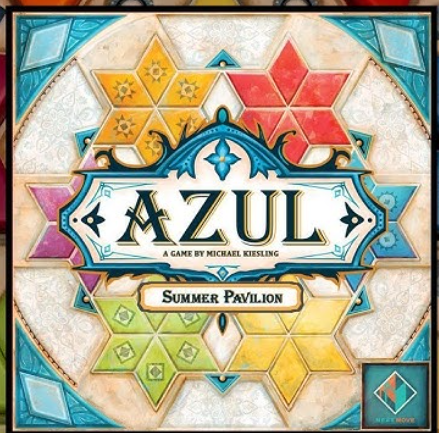
Azul
Abstract Strategy
Azul

Theme: Chaining

Introduced by the Moors, azulejos (originally white and blue ceramic tiles) were fully embraced by the Portuguese when their king Manuel I, on a visit to the Alhambra palace in Southern Spain, was mesmerized by the stunning beauty of the Moorish decorative tiles. The king, awestruck by the interior beauty of the Alhambra, immediately ordered that his own palace in Portugal be decorated with similar wall tiles. As a tile-laying artist, you have been challenged to embellish the walls of the Royal Palace of Evora.

In the game Azul, players take turns drafting colored tiles from suppliers to their player board. Later in the round, players score points based on how they've placed their tiles to decorate the palace. Extra points are scored for specific patterns and completing sets; wasted supplies harm the player's score. The player with the most points at the end of the game wins.

2-4 45m
Easy
Wingspan
Animals
Wingspan

Theme: Action Queue

Wingspan is a competitive, medium-weight, card-driven, engine-building board game from Stonemaier Games. It's designed by Elizabeth Hargrave and features 180 birds illustrated by Natalia Rojas and Ana Maria Martinez.

You are bird enthusiasts—researchers, bird watchers, ornithologists, and collectors—seeking to discover and attract the best birds to your network of wildlife preserves. Each bird extends a chain of powerful combinations in one of your habitats (actions). These habitats focus on several key aspects of growth:

  • Gain food tokens via custom dice in a birdfeeder dice tower
  • Lay eggs using egg miniatures in a variety of colors
  • Draw from hundreds of unique bird cards and play them

The winner is the player with the most points after 4 rounds.

—description from the publisher

From the 7th printing on, the base game box includes Wingspan: Swift-Start Promo Pack.

1-5 70m
Easy
Dune: Imperium
Movies / TV / Radio theme
Dune: Imperium

Theme: Card Play Conflict Resolution

Dune: Imperium is a game that uses deck building to add a hidden information angle to traditional worker placement. It finds inspiration in elements and characters from the Dune legacy, both the new film from Legendary Pictures and the seminal literary series from Frank Herbert, Brian Herbert, and Kevin J. Anderson.

As a leader of one of the Great Houses of the Landsraad, raise your banner and marshal your forces and spies. War is coming, and at the center of the conflict is Arrakis – Dune, the desert planet.

You start with a unique leader card, as well as a deck identical to those of your opponents. As you acquire cards and build your deck, your choices will define your strengths and weaknesses. Cards allow you to send your Agents to certain spaces on the game board, so how your deck evolves affects your strategy. You might become more powerful militarily, able to deploy more troops than your opponents. Or you might acquire cards that give you an edge with the four political factions represented in the game: the Emperor, the Spacing Guild, the Bene Gesserit, and the Fremen.

Unlike many deck building games, you don’t play your entire hand in one turn. Instead, you draw a hand of cards at the start of every round and alternate with other players, taking one Agent turn at a time (playing one card to send one of your Agents to the game board). When it’s your turn and you have no more Agents to place, you’ll take a Reveal turn, revealing the rest of your cards, which will provide Persuasion and Swords. Persuasion is used to acquire more cards, and Swords help your troops fight for the current round’s rewards as shown on the revealed Conflict card.

Defeat your rivals in combat, shrewdly navigate the political factions, and acquire precious cards. The Spice must flow to lead your House to victory!

Some important links: The Official FAQ, the Unofficial FAQ, and an Automa (solo and 2p) Overview

1-4 120m
Easy

The Skills Nobody Talks About

Through board games, we developed abilities that directly shaped our careers:

Strategic Thinking
Active

Planning ahead, adapting to change

Critical for long-term project planning, managing variable resources, and adapting when initial pathways are blocked.

Interactive LearningTaught by Scythe, Terraforming Mars, & Dune: Imperium.
Negotiation & Collaboration

Building alliances, managing conflict

Risk Assessment

Knowing when to push and when to hold back

Emotional Intelligence

Reading people, staying calm under pressure

Decision Making

Moving fast with incomplete information

Leadership

Earning influence through actions, not authority

These aren't just fun party tricks. They're the exact skills that made us better professionals.

We learned them at the table — but the table itself was missing back home.

So we set out to bring the best of what we learned back to India.